Stop Chasing Goals. Start Living Your Values.

Stop Chasing Goals. Start Living Your Values.

I had a friend who told me he hadn’t felt happy in years. Not depressed. Not anxious. Just… empty. And when I asked what he did for fun, he paused for a long time. “I don’t really know anymore,” he said.

Sonja Lyubomirsky’s research found that external achievements account for only about ten percent of lasting happiness. The forty percent within our control? It comes from how we spend our time and what meaning we attach to it.

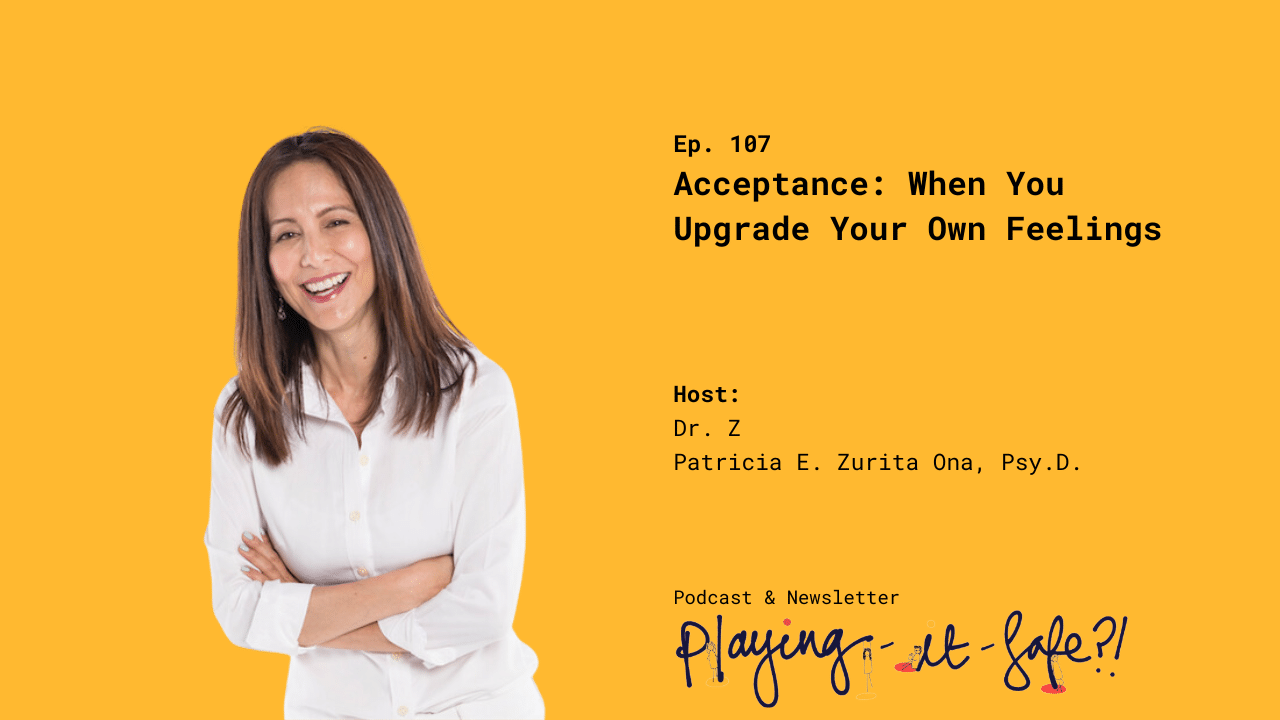
This week’s podcast episode, I’m going into the psychology of why values-based living is the piece most productivity advice skips entirely, and why that gap is exactly where the emptiness lives.

If you’ve been feeling vaguely stuck without being able to name why, not necessarily burned out, not failing, just feeling off, this episode is for you.

Show notes with time-stamps

0:00 Phoebe’s 101st birthday story
1:13 Playing-it-safe behavior #8: discounting what you really want
2:09 Gabriele Oettingen’s research on mental contrasting
3:01 Deci and Ryan’s self-determination theory (autonomy, competence, relatedness)
3:53 Sonja Lyubomirsky on lasting wellbeing
4:05 Psychological flexibility meets values
4:54 Guided exercise: imagining your 101st birthday party
6:21 Viktor Frankl on meaning as a primary human drive
7:60 What will you do this week if you weren’t playing-it-safe?

Listen Here

​Apple​
​Spotify

And if you want to map the gap in your own life, my free Values-Based Review, Life Audit is in the show notes.

Learn research-based skills and actionable steps to make better decisions, adjust to uncertain situations, make bold moves, & do more of what matters to you.

Reader transparent
Orange 2

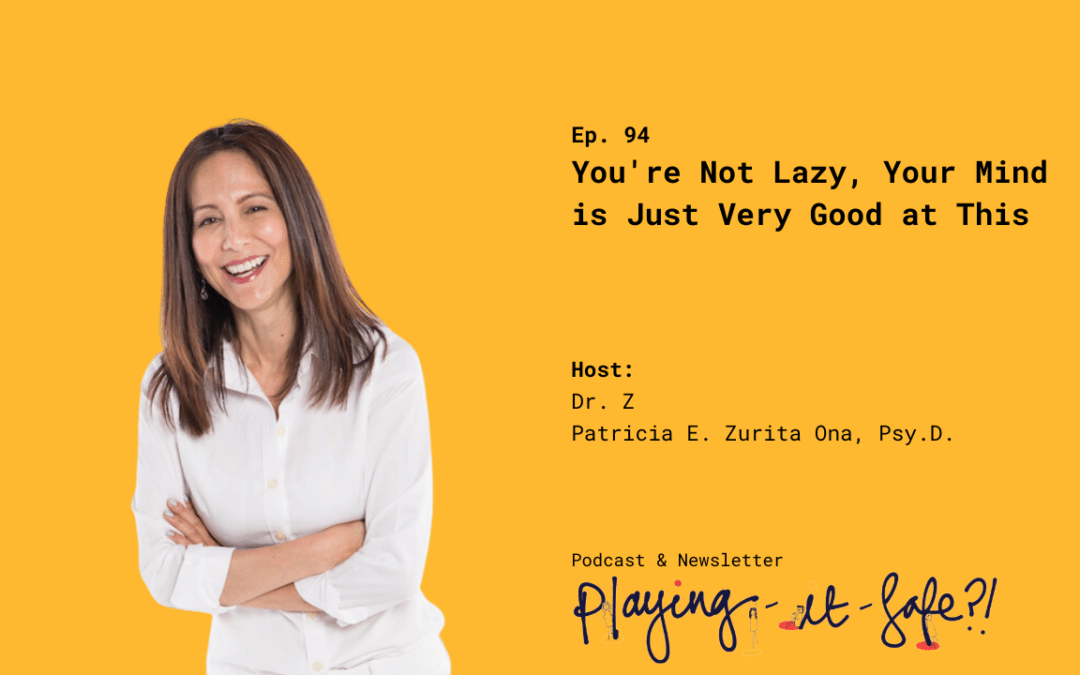
You’re Not Lazy, Your Mind is Just Very Good at This

You’re Not Lazy, Your Mind is Just Very Good at This

I’m back from a mini-break!

Every two weeks, I’ll bring you compassionate, evidence-based skills, based on Acceptance and Commitment Therapy, to help you stop ‘playing-it-safe’ and start doing what truly matters to you!

Let’s retire the word “lazy.”

In today’s 10-min episode of the Playing-It-Safe Podcast, I break down exactly why the lazy label is sabotaging you.

If you have been calling yourself lazy for years, this episode is for you.

Show notes with time-stamps

0:00 The “lazy” client who wasn’t actually lazy
1:26 Playing-it-safe behavior #1: accepting negative stories about yourself
2:19 Martin Seligman’s research on learned helplessness
2:46 Paul Gilbert’s compassion-focused therapy & the threat response
3:08 Why psychological flexibility matters
3:47 Listener story from episode 93 on procrastination
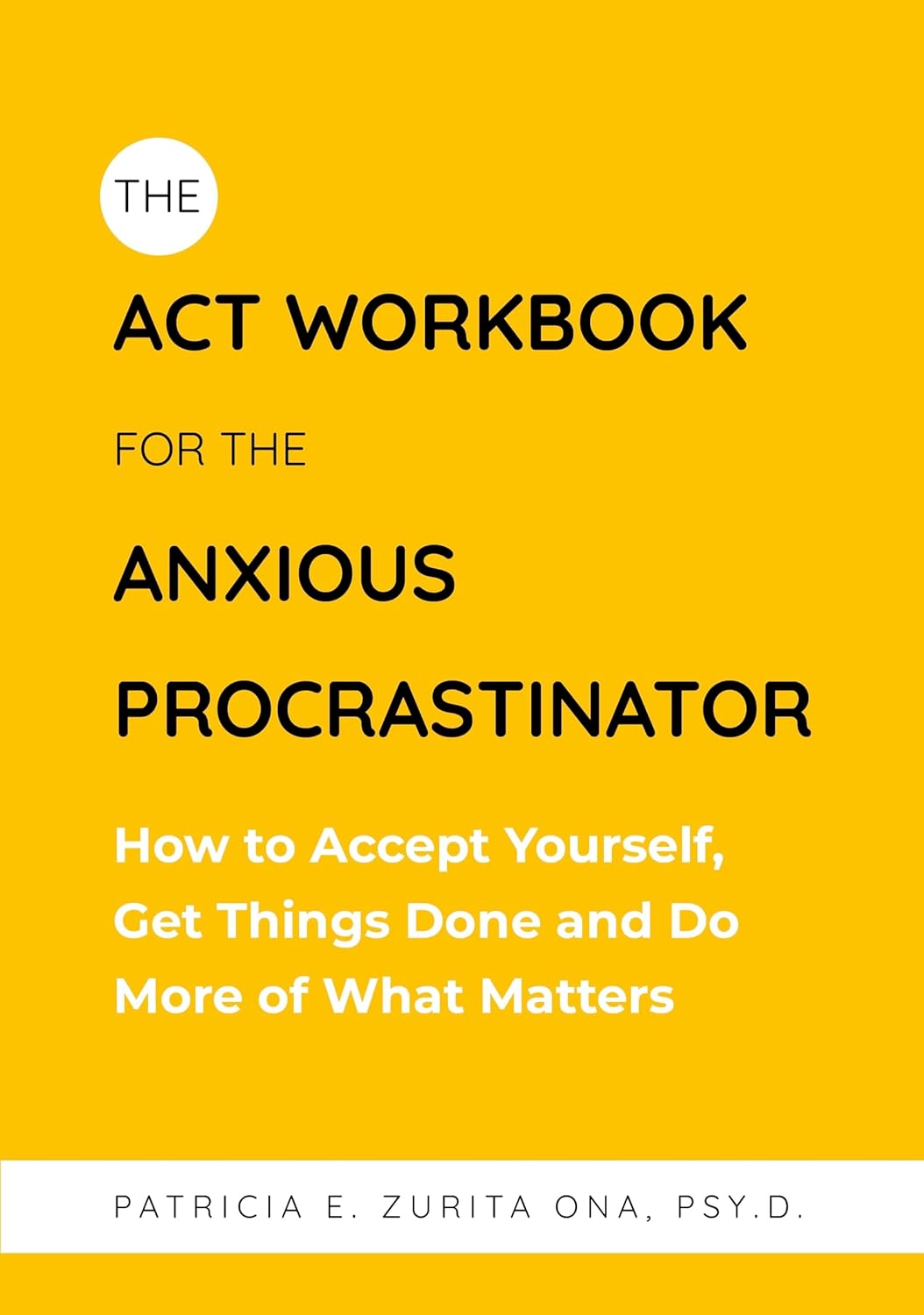
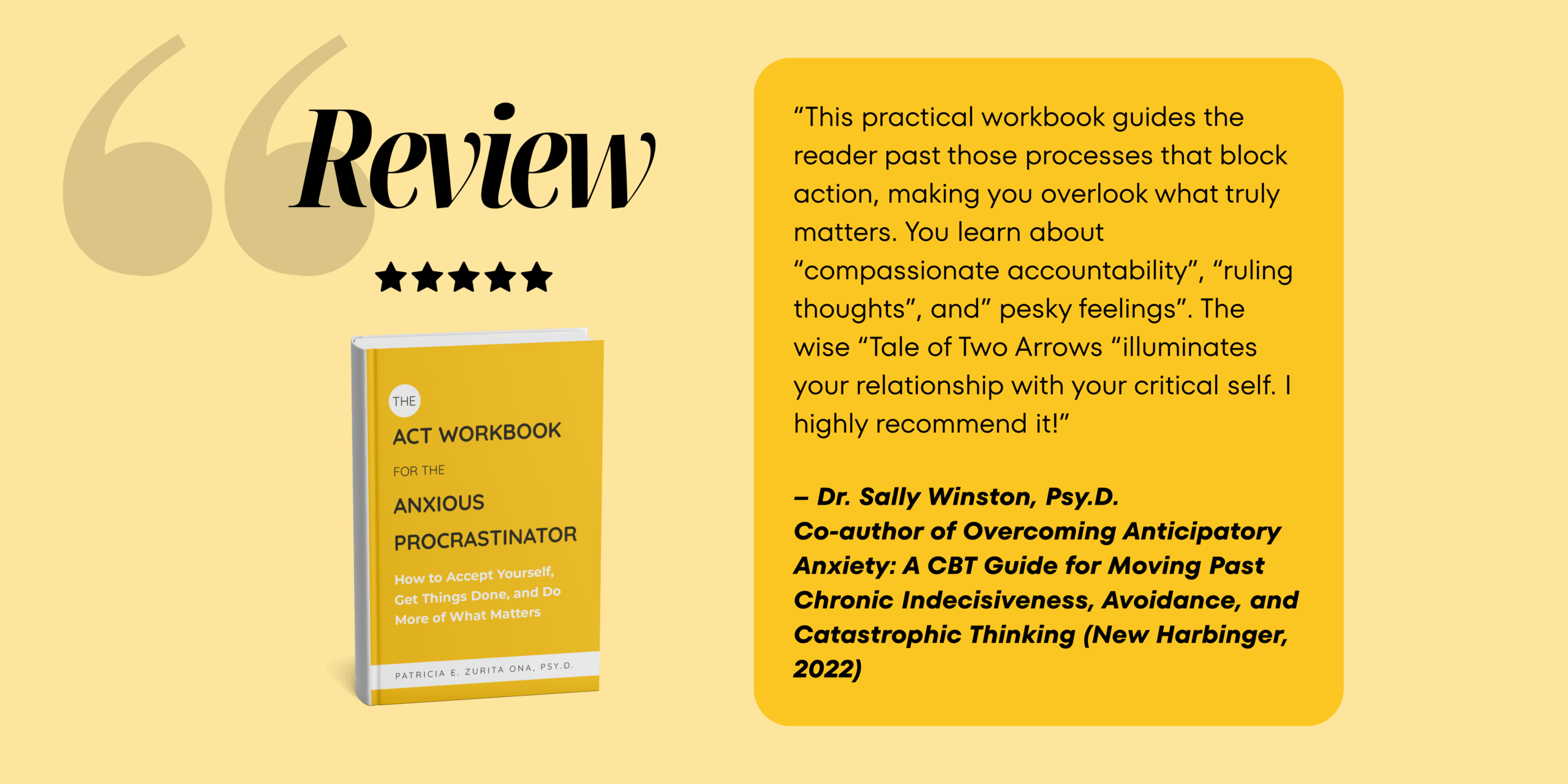
4:18 The “Life Audit” exercise (from The ACT Workbook for the Anxious Procrastinator)
5:48 Arye Kruglanski’s research on values-driven action
6:27 Dr. Z’s personal story of calling herself lazy
7:07 This week’s challenge: notice and name the story

Listen Here

​Apple​
​Spotify

And if you want to go deeper on your specific procrastination patterns, my free Procrastination Webinar is in the show notes.

Learn research-based skills and actionable steps to make better decisions, adjust to uncertain situations, make bold moves, & do more of what matters to you.

Reader transparent
Orange 2

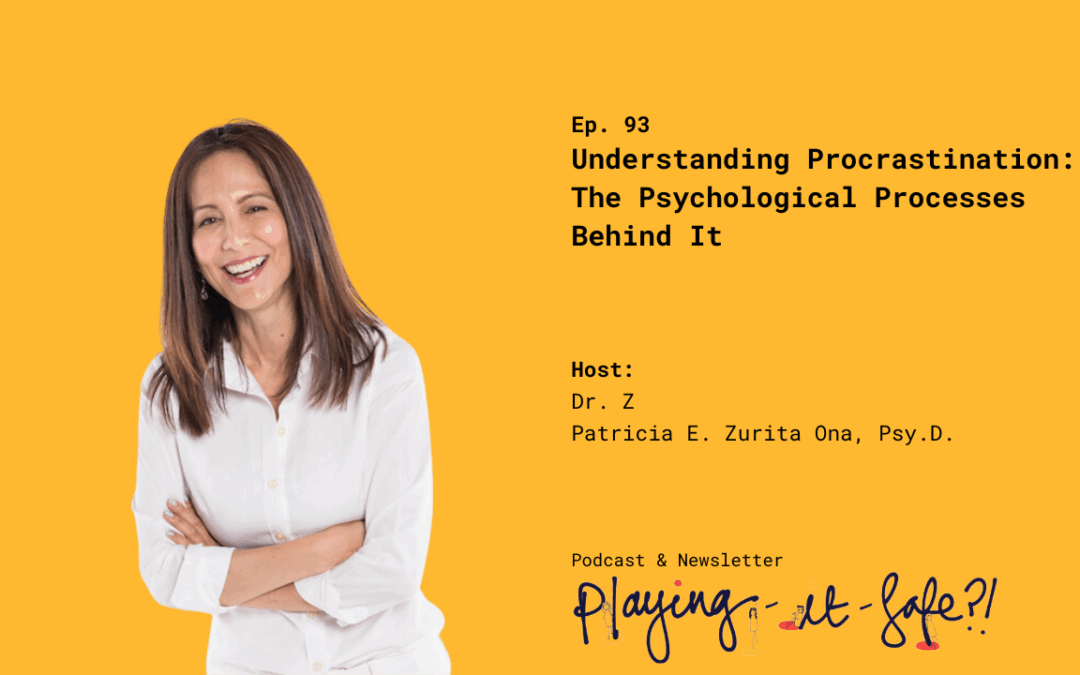
Understanding Procrastination: The Psychological Processes Behind It

Understanding Procrastination: The Psychological Processes Behind It

In this episode, Dr. Z. dives deep into the world of procrastination, debunking common myths, exploring the different types of procrastinators, and unpacking the psychological processes that fuel our tendency to delay.

Debunking the Myths of Procrastination

Many of us have internalized misconceptions about procrastination. Dr. Z. tackles these head-on, revealing that procrastination is rarely about laziness or poor time management. Instead, it often stems from deeper psychological factors.

For example, the myth that people “work better under pressure” is just that, a myth. Research shows that last-minute work rarely leads to better results and often increases stress. Similarly, blaming procrastination on a lack of willpower oversimplifies the issue; it’s more about understanding and addressing the underlying psychological factors that drive problematic procrastination.

Six Reflective Questions to Break the Cycle

Dr. Z. shares six reflective questions to unpack the psychological roots of procrastinating behaviors.

Show notes with time-stamps

00:09 Balancing Work and Wellbeing
00:54 The Reality of Tough Choices
02:51 Understanding Procrastination
04:16 Six Psychological Processes Behind Procrastination
07:46 Different Types of Procrastinators
08:44 Self-Reflection Questions

Listen Here

Apple
Spotify


act for proc
11 scaled
9 scaled
12 scaled
14 scaled

The Power of Flexible Consistency

The Power of Flexible Consistency

Reading Time: 4 minutes

When you care about something, of course you want to give it your best – and you give your best by putting your head, heart, and hands to work. Giving your best also means putting your time, energy, and mental resources into it. And it also means going into go-go-go mode many times, one project after another and one task after another.

It’s a precious thing to care deeply about the things we do, for sure. What would life be without our passions, wants, and aspirations? They’re strong forces we use to navigate through many moments in our lives; they keep us moving, give us meaning, and point us toward our values.

But what happens when we keep moving without pausing to check how we’re living? What happens when we keep going and going, driven by our passions, without checking our rhythm, pace, and speed? What happens when we keep withdrawing from the bank account of life without making any deposits on it?


The myth of life-work balance

Well-known organizational psychologist Adam Grant (2020) has questioned multiple times the notion of life-work balance. The reality is that no matter how popular this idea has become, it’s a myth. Here’s why: when we truly care about something, our schedule is not balanced in terms of the number of hours we spend hanging out with friends and family and participating in other things that are important to us.

Think for a moment about your own day-to-day life: how often do you achieve this life-work balance everyone is talking about? How often do you find yourself worrying about overly focusing on one area and abandoning others? How often do you criticize yourself for not having life-work balance, as if something is wrong with you? How often do you feel the stress of striving to get things done under a deadline?

When we buy into the idea of having life-work balance, we dream about getting work done in four hours so we can then relax and devote four hours to hanging out with our significant other. We picture having a perfect balance, a perfect equipoise, a perfect equilibrium among the things, relationships, responsibilities, and tasks that are part of our lives.

The truth is that there may be times when that symphony of people, time, and activities that constitutes our lives gets harmoniously organized. But most of the time, it’s a tuneless, dissonant, and discordant collection of the things we do and the time we expend on them.

Life-work balance is a fantasy goal, period. Instead of striving for it, Grant suggests that it’s more important we find our life-work rhythm.

To find your work-life rhythm, I invite you to consider this question: How can you be consistent and flexible at the same time!

Flexible consistency

Hear me out for a moment. Have you ever seen runners training for a marathon? Some of them run every day for a specific number of weeks or months. Others run every other day. Others run with a certain frequency – say, two to three days in a row – take a break of the same length, and then pick it up again. Is that wrong? Does the frequency of a runner’s practice runs determine their chances of winning a race?

Quite likely, most of the messages you have heard about consistency are some version of, “You need to show up all the time. Consistency is the key to success. Showing up is half the battle.”

  • But what really happens when you push yourself to show up unfailingly, and always to what you said you were going to do, without considering other circumstances in your life?
  • What happens if you push yourself to work regularly while one of your best friends is going through a breakup, your pet is sick, or your partner is struggling with the kids?

Life is always happening, and rarely do we have the chance to choose what comes our way. Unexpected, unplanned, and unforeseen situations happen out of the blue. And when those moments occur, they invite us to revisit this idea of “100 percent consistency.”

Instead of holding tightly onto thoughts of “always showing up,” and variations on these thoughts, you may want to consider approaching things with flexible consistency (sounds like an oxymoron, right?).

Flexible consistency is about creating a consistent schedule to get things done in a way that is adjustable, adaptable, and changeable; basically, it’s about creating a schedule that is context-based and not rule-based.

There is no one way or the perfect way of making things happen and doing what matters; there are so many ways to do so. If you’re a maker, a doer, a creator, a person with a good track record, or a person who makes things happen, you know how it feels to be preoccupied with getting things done.

The key is to do these things without burning yourself out.

5 key questions to do what you care about, consistently!

Before you jump onto another activity, ask yourself these questions:

  • Does this activity contribute to a life I’m proud of?
  • Is this activity a move toward the life I want to build?
  • How can you organize your values-based life into a well-orchestrated rhythm, from the time you wake up to the time you go to sleep?
  • How can you move from push-and-pull mode, where you strive to do more work, faster, and with excellent quality, to doing what you care about, at a high level, without burning yourself out?
  • How can you create a seasonal schedule for doing what you care about?
Overcoming fear of failure

Overcoming fear of failure

Drop your standards! Let go of your perfectionistic tendencies!

If I were paid a dollar every time I heard this message, I would have a large bank account by now.

When you’re pursuing a top performance ​ from athletic to intellectual to artistic ones – it’s fundamental that you distinguish those common principles that improve your performance and your well being altogether.

In this episode, Brad Stulberg and I discussed research-based skills to deal with high-achieving and striving behaviors in a skillful manner and without losing yourself.

Key Takeaways

About Brad Stulberg

Brad Stulberg’s work explores principles of mastery and well-being that transcend capabilities and domains. Brad is particularly interested in the philosophical and psychological foundations of excellence, and the habits and practices necessary to attain it. He is an author of the book, The Practice of Groundedness, and coauthor of the books Peak Performace and The Passion Paradox.

These books explore the art, science, and practice of motivation, values-driven excellence, and maximizing one’s potential—all the while realizing a more fulfilling and sustainable kind of success.

He writes about these concepts on The Growth Equation, his popular blog and multimedia platform. He is a regular contributor at The New York Times, and his work has also been featured in The Wall Street Journal, Washington Post, New Yorker, Time, Los Angeles Times, Wired, New York Magazine, Sports Illustrated, and more. He is also a contributing editor to Outside Magazine. In his coaching practice, he intimately partners with clients to apply the principles about which he writes.

Brad’s latest book

Screenshot 2024 03 06 at 7.51.37 PM
brad

Resources

Resources from Dr. Z

Show notes with time stamps

00:31 Understanding Fear-Based Reactions
01:02 Overcoming Perfectionism
01:36 Interview with Brad Stulberg: High Achieving and Striving Behaviors
02:19 Reflecting on Your Life and Overcoming Overthinking
03:28 Living According to Your Values
04:10 Using a Values-Based Review to Live the Life You Want
04:46 Conversation with Brad Stulberg: Balancing Productivity and Wellbeing
05:43 Understanding the Double-Edged Sword of Optimization
08:44 Dealing with Fear of Failure and Regret
17:48 Navigating Ego-Driven Goals and Values-Based Goals
24:09 Overcoming Experiential Avoidance

Listen Here

Apple
Spotify

Exploring the intersection of perfectionism, procrastination, and performance

Exploring the intersection of perfectionism, procrastination, and performance

Perfectionism isn’t a personality quirk. It’s a pattern of reinforced behaviors that can seep into every aspect of your life.

You may set certain standards for yourself, certain rules about how things are supposed to be or how you are supposed to behave; while you may meet those standards for a while, they eventually – and inevitably – fall short. Then, you feel crushed. Then, you criticize yourself. And then, to drown out the negativity, you set new goals, standards, and expectations for yourself. The cycle of ineffective perfectionistic actions repeats and maintains itself.

In this podcast episode, I chat with Monica Basco, Ph.D. We discuss specific topics related to perfectionism in detail:

(a) A large part of the conversation clarifies how having high standards and being perfectionistic can both be beneficial and detrimental, and finding the balance between the two is crucial.

(b) We also discussed the interplay between perfectionistic behaviors and procrastination as two sides of the same coin. 

(c) Monica and I highlighted the fact that setting high-goals is productive when one can tolerate failure. However, learning to pursue what matters and learning to let things go – as the right thing to do – is also important.

(d) Finally, we discussed ideas for you to conduct a functional analysis, or in other words, we discussed key questions for you to understand your drive to engage in perfectionistic actions (e.g., what is my mind trying to protect me from right now?)

Key Takeaways

  • Discussing perfectionism and high achieving behaviors
  • Understanding the impact of high goals
  • The role of confidence in goal setting
  • The intersection of perfectionism and procrastination

About Monica Basco, Ph.D.

Monica Basco, Ph.D., is a clinical psychologist and former Associate Director for Science Policy, Planning, and Analysis at the Office of Research on Women’s Health at the National Institutes of Health. She served as Assistant Director for Neuroscience, Mental Health, and Broadening Participation at the White House Office of Science and Technology Policy from 2014 to 2015.

Dr. Basco is an internationally recognized expert in cognitive-behavioral therapy and a founding fellow of the Academy of Cognitive and Behavioral Therapies. She was formerly on the faculty of the University of Texas at Arlington, where she was awarded the University of Texas Regents’ Outstanding Teaching Award.

perfectionism

Resources

Resources from Dr. Z.

Show notes with time-stamps

01:00 Understanding Fear and Perfectionism
01:31 Dealing with Perfectionism and High Achieving Behaviors
02:35 Cognitive Behavior Therapy and Perfectionism
04:14 Setting Goals and Dealing with Failure
05:12 Understanding Overachievement and Expectations
08:37 Dealing with Rejection and Pursuing Goals
20:43 Understanding the Intersection of Perfectionism and Procrastination

Listen Here

Apple
Spotify

Final Thoughts on Perfectionism, Procrastination, and Performance

There is nothing wrong with striving to do things right and perfectly – that’s natural when you deeply care about things that matter to you. And, as you have heard me say before, it’s extremely important that you learn to harness the power of perfectionistic actions without losing yourself.

HOW DO YOU PLAY-IT-SAFE?


Complete this 7-minutes quiz
and get your Playing-it-safe Profile!!

You have Successfully Subscribed!