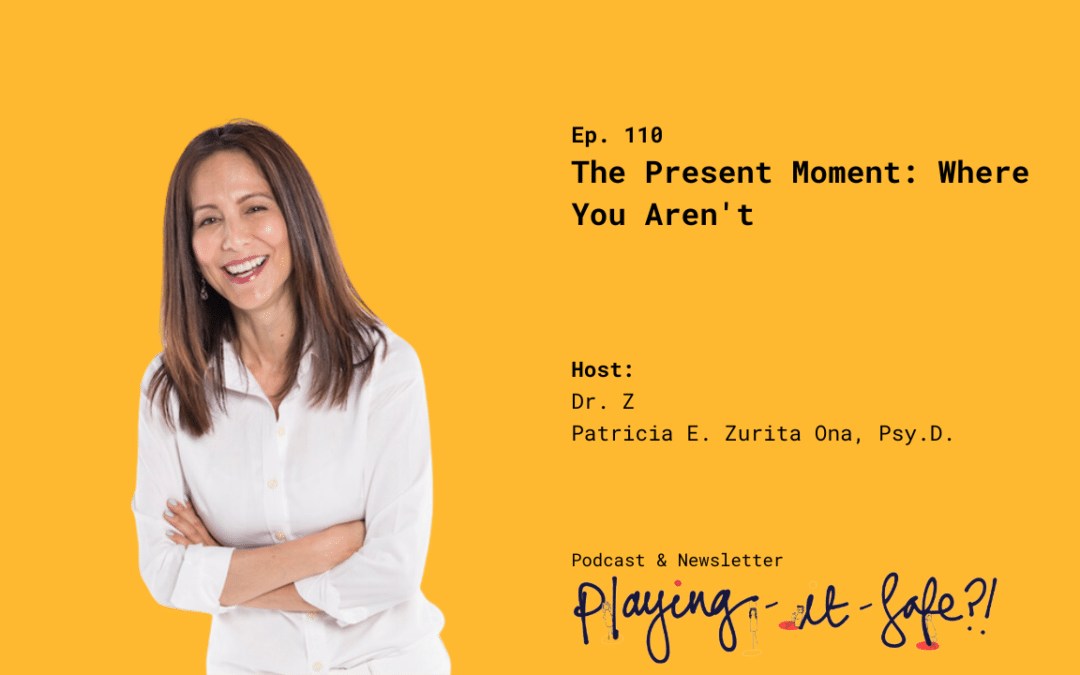
The Present Moment: Where You Aren’t
In today’s fast-paced world, it’s easy to find ourselves physically present but mentally miles away. Whether we’re preoccupied with future meetings or replaying past conversations, being rooted in the present moment often feels like an elusive goal.
This episode highlights the importance of “Contact with the Present Moment,” a core process in Acceptance and Commitment Therapy (ACT).
Show notes with time-stamps
00:00 Living on Autopilot
01:51 What Present Moment Means
03:21 What It Is Not
04:50 Why We Avoid Now
06:11 Simple Grounding Tips
08:24 When Grounding Becomes Avoidance
Listen Here
Resources mentioned
- Playing-It-Safe Questionnaire (free) → https://www.thisisdoctorz.com/playing-it-safe-questionnaire/
- Values-Based Review: Life Audit (free) → https://proud-snow-5694.ck.page/d2a5e77ba3
- ACT Coaching for anxiety-based struggles → https://eastbaybehaviortherapycenter.com/act-coaching/
- Therapy at East Bay Behavior Therapy Center → https://eastbaybehaviortherapycenter.com/