You’ve probably heard the advice: just show up. Just be there. And you do. You walk through the door, you sit at the table, you’re technically present.
But what if the phone in your hand, the seat near the exit, the constant questions you ask so no one ever asks you anything back … what if those are the very things quietly blocking the life you want to live?
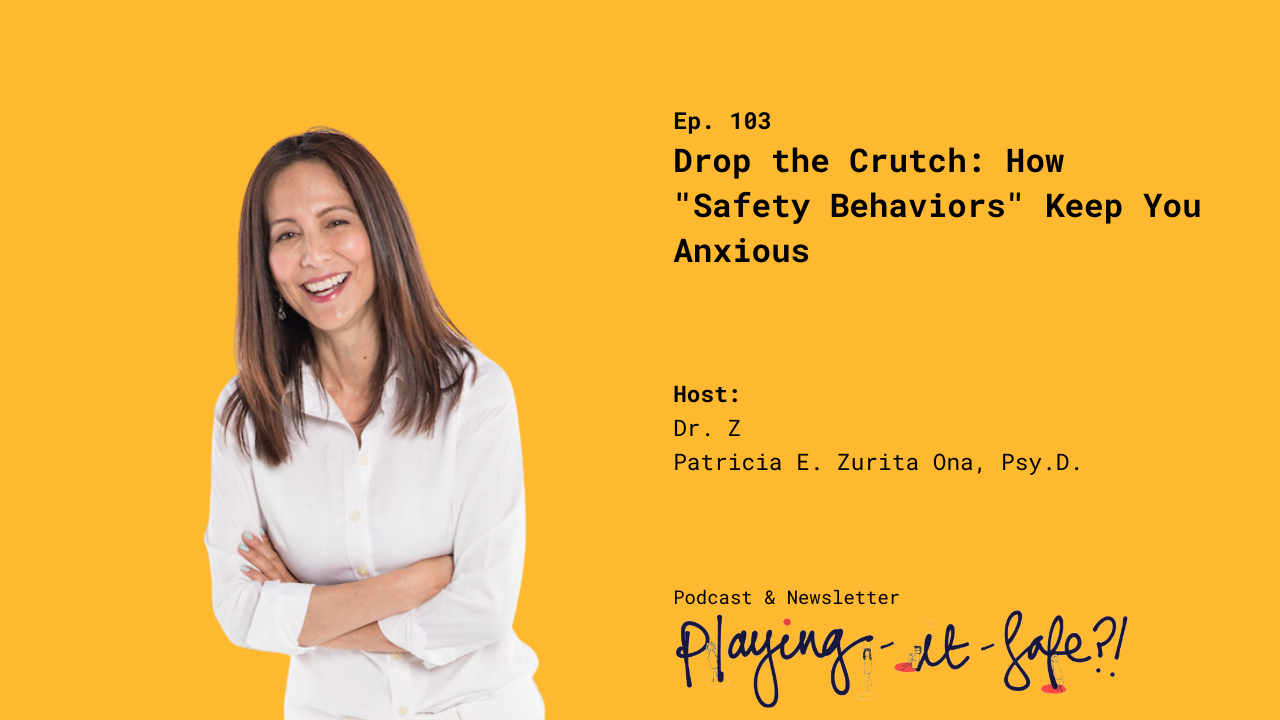
That’s what this episode of the Playing-It-Safe podcast is about. The subtle safety crutches that nobody else sees, but you know are there.
Show notes with time-stamps
0:32 “Safety crutches:” the subtle ways we show up while hiding behind a shield
1:36 Why safety crutches are hard to spot
2:05 How the anxiety loop works: your mind as an “advisory board”
2:51 Everyday examples: phone checking, crossed arms, sitting near the exit
3:44 The relational cost: people can feel the distance
4:43 ACT framework: “safety behaviors” aren’t a character flaw
5:16 Salkovskis’ research: safety behaviors maintain anxiety long-term
5:59 Psychological flexibility and getting “stuck”
6:34 Why subtle safety behaviors are hard to see in yourself
7:18 The skill: dropping subtle safety behaviors
7:36 Step 1: Name your crutches without shame
8:00 Common social & professional safety behaviors
9:18 “What is this behavior protecting me from feeling?”
9:53 Your fear points to what matters most
10:31 Encouraging you to try mini experiments to drop your crutches one by one
11:18 Let anxious feelings be there instead of fighting them
12:03 Listener story: dropping the “talk non-stop” crutch
12:45 The big question: what do you want your life to feel like?
13:29 How safety crutches block genuine connection
13:50 Dr. Z shares her own safety crutch: overexplaining
Listen Here
Learn research-based skills and actionable steps to make better decisions, adjust to uncertain situations, make bold moves, & do more of what matters to you.