Self-criticism is a classic playing-it-safe move.

  • What are the harsh criticisms that your mind come up with?
  • How do you handle them?
  • Do you try to replace them with positive thoughts?
  • Do you do more with your life?
  • Do you try to prove yourself that you are an okay person?

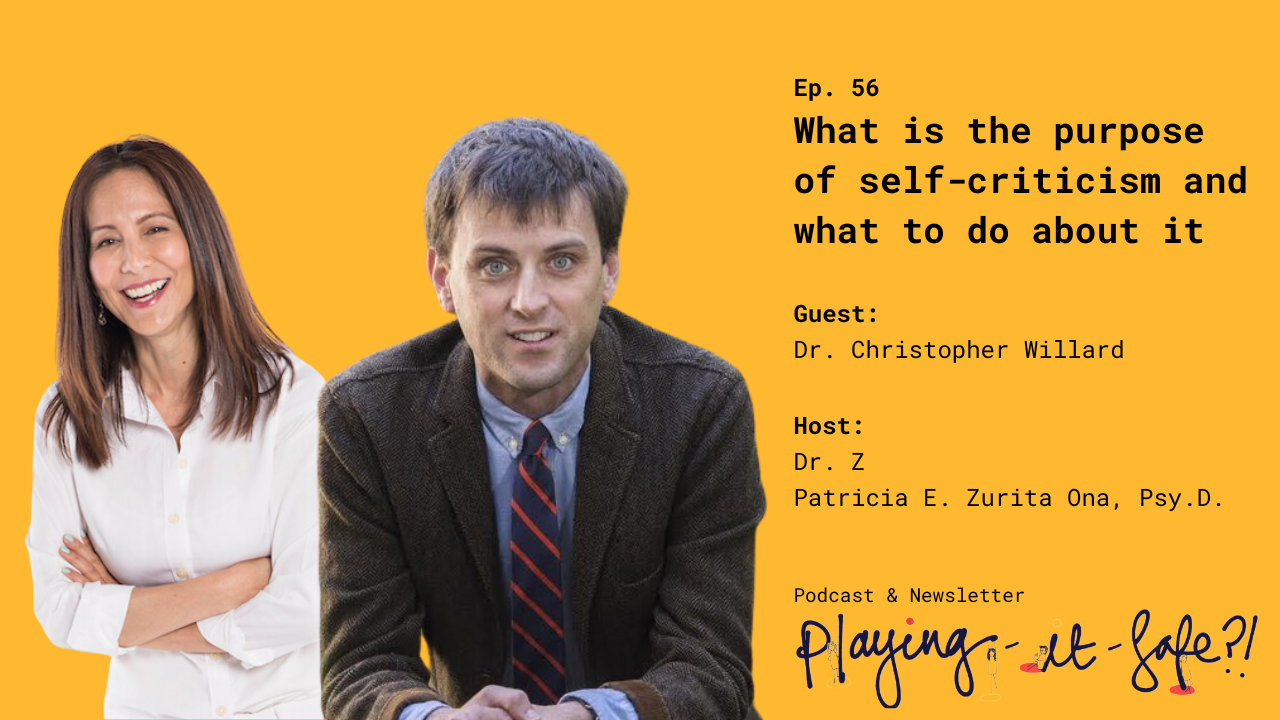
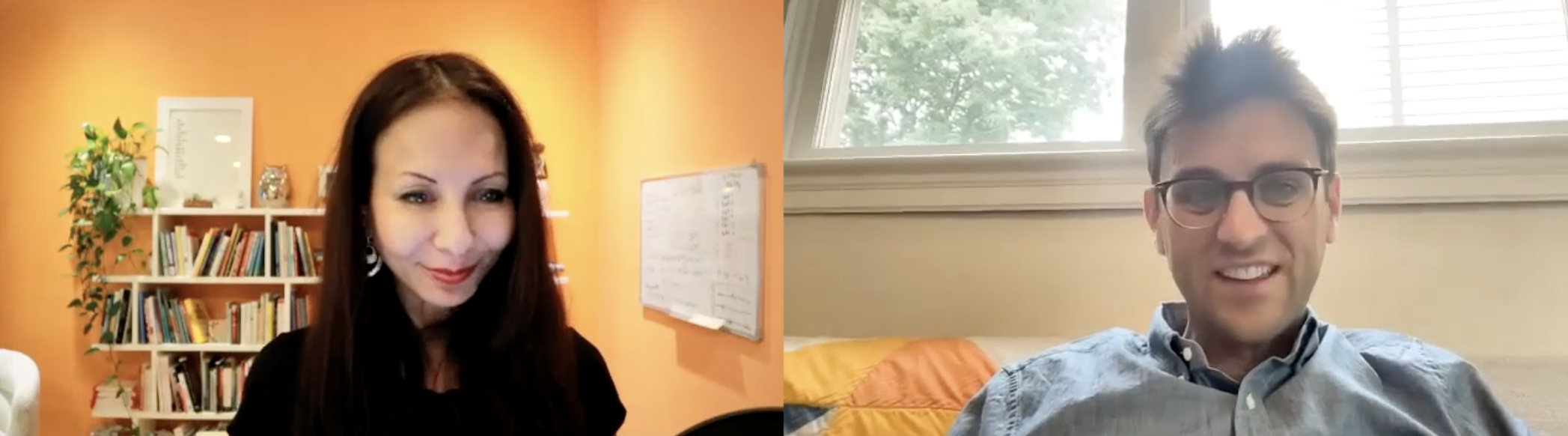
I ask all these questions to Dr. Christopher Willard, an expert on mindfulness and self-compassion.

Key Takeaways

In my conversation with Dr. Christopher Willard you will hear about:

  • The purpose or the function of self-criticism. Why do we do it?
  • The difference between self-compassion and self-esteem
  • How to handle thoughts like “harsh criticism motivates me or I don’t deserve to be kind to myself”
  • The difference between gratitude practices and toxic positivity
  • How to practice gratitude
  • What the default mode network is
  • Chris’s upcoming book on resilience
  • How to develop perspective-taking

About Dr. Christopher Willard

Dr. Christopher Willard is a psychologist and an educational consultant, specializing in mindfulness. He serves on the board of directors at the Institute for Meditation and Psychotherapy, and is the president of the Mindfulness in Education Network. He is the author of Child’s Mind (2010), Growing Up Mindful (2016), Raising Resilience (2017), and eight other books for parents, professionals, and children. He also teaches at Harvard Medical School.
self-criticism

ACT online courses 

Learn more

Learn more

Learn more

Learn more

Learn more

Learn more

About Dr. Z.

I’m originally from Bolivia, South America, and am a psychologist by training. I’m formally trained in empirically supported treatments, and when I say “formally,” I mean that since 2004 I have received intensive training in them, particularly in Acceptance and Commitment Therapy (ACT) and Cognitive Behavior Therapy (CBT). 

Over the past 18 years, I have created resources for and worked with overthinkers and overachievers dealing with all types of anxiety-related struggles: perfectionism, procrastination, productivity anxiety, uncertainty intolerance, indecision, impostor phenomenon, overthinking, phobias, rumination, panic, worry and obsessive-compulsive disorder. I absolutely love my job!

In 2019, I was nominated as a fellow by the Association for Contextual Behavioral Science because of my contributions related to the applications of ACT for anxiety-based struggles. I’m the author of seven books and the co-author of three (see the section on previously written books).

I’m the founder and director of the East Bay Behavior Therapy Center, a boutique private center in the San Francisco Bay Area that offers therapy and coaching for anyone experiencing anxiety-based struggles.

In 2023, I gave a TEDx talk, “Stop playing-it-safe and start living” that has more than 264K downloads.

While I’m a psychologist by training and science-based by passion, my style is jargon-free, accessible, caring, and lighthearted; teaching ACT skills doesn’t have to be boring or inaccessible, so I do my best to make every skill I teach—in any format—as engaging as possible. 

I believe that learning to navigate anxiety-based reactions is one of the key skills of the 21st century, and I’m passionate about it.

I'm passionate about disseminating ACT skills for anxiety-based struggles.

HOW DO YOU PLAY-IT-SAFE?


Complete this 7-minutes quiz
and get your Playing-it-safe Profile!!

You have Successfully Subscribed!

Share This