Do you find yourself anxiously anticipating rejection in everyday situations?
The fear of being rejected or judged leads to a hyper-awareness of others’ facial expressions, opinions, or anticipation of rejection. It’s like you’re expecting others will reject you and interpret a situation using those lenses. This interplay between rejection sensitivity and anxiety influences how you navigate your relationships.
Understanding the root of rejection sensitivity and its connection to anxiety is pivotal to stop playing-it-safe automatically.
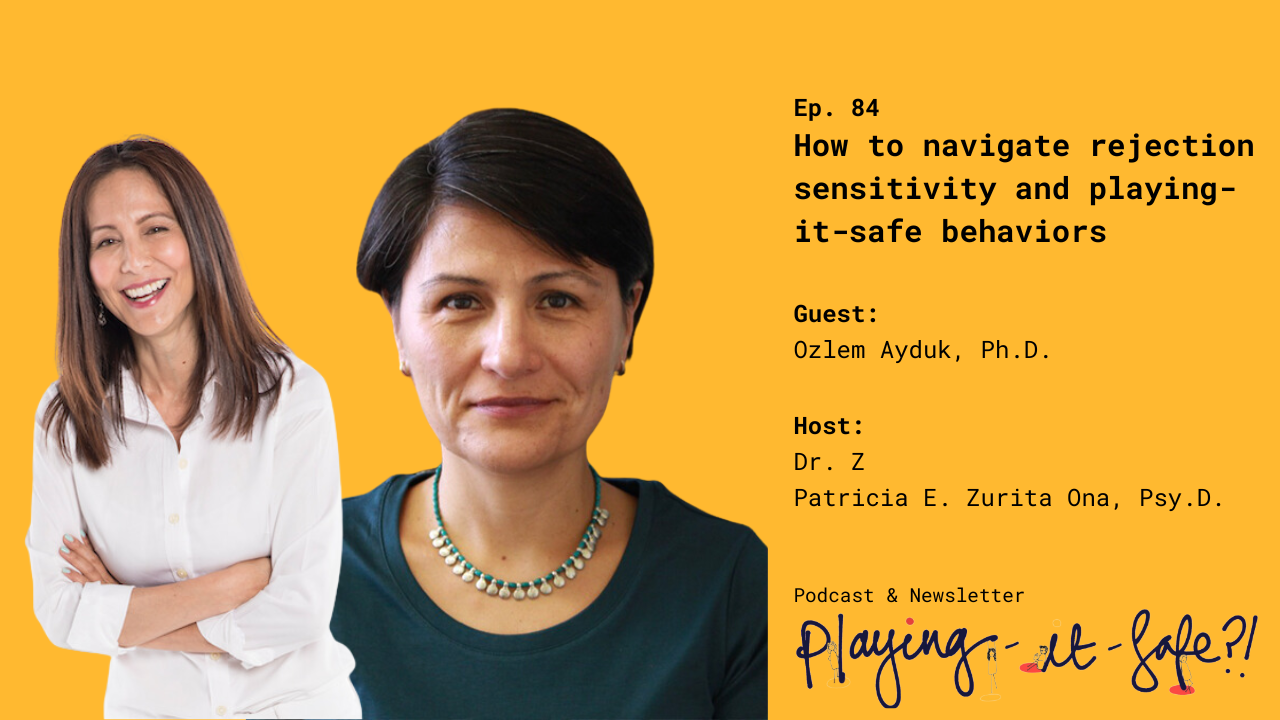
In today’s episode, I interview Ozlem Ayduk, Ph.D.
We delve deeper into the psychological processes behind rejection sensitivity and anxiety. You will hear practical strategies to break free from the shackles of rejection sensitivity and anxiety.
Table of Contents
Key Takeaways
- Self-distancing
- Rejection sensitivity
- What maintains rejection sensitivity
- The relationship between experiential avoidance and rejection sensitivity
- How ambiguous situations are triggers for responses driven by rejection sensitivity
- The use of self-talk
- Is it helpful to be highly sensitive in certain contexts? When and where?
- The upsides or benefits of high emotional sensitivity
- Can someone struggle with rejection sensitivity without a history of rejection?
- The intersection of emotion regulation and rejection sensitivity
- Is rejection sensitivity dysphoria different or the same as rejection sensitivity?
About Ozlem Ayduk, Ph.D.
Ozlem Ayduk worked as a postdoctoral fellow at Columbia University for three years before heading west to California in 2002 to join the U.C. Berkeley department of psychology as an assistant professor. She became an associate professor in 2009, and a full professor in 2015. Ayduk is a co-director of the Relationship and Social Cognition Lab at U.C. Berkeley.
In addition to teaching, Ayduk has been active with professional psychology societies. She is a fellow at the Society of Experimental Social Psychology and served on its executive board (2015–2018). She is also a fellow at the Society for Personality and Social Psychology, where she served on the grant review panel (2016–2017) and a three-year term on the board of directors (2018–2020).

Resources
- Rejection Sensitivity Questionnaire
- Ozlem Ayduk’s UC Berkeley profile: https://psychology.berkeley.edu/people/ozlem-ayduk
- Ozlem Ayduk’s LinkedIn: https://www.linkedin.com/in/ozlem-ayduk-phd-33b341219/
Resources from Dr. Z.
Show notes with time-stamps
Listen Here