Reading Time: 4 minutes
It was finally time to give road biking shoes a try.
I’d heard all about the benefits—better pedaling efficiency, smoother movement, and that elusive “aerodynamic” feel that cyclists rave about. But stepping into those shoes, both literally and figuratively, was about more than cycling; it was about stepping outside of my comfort zone.
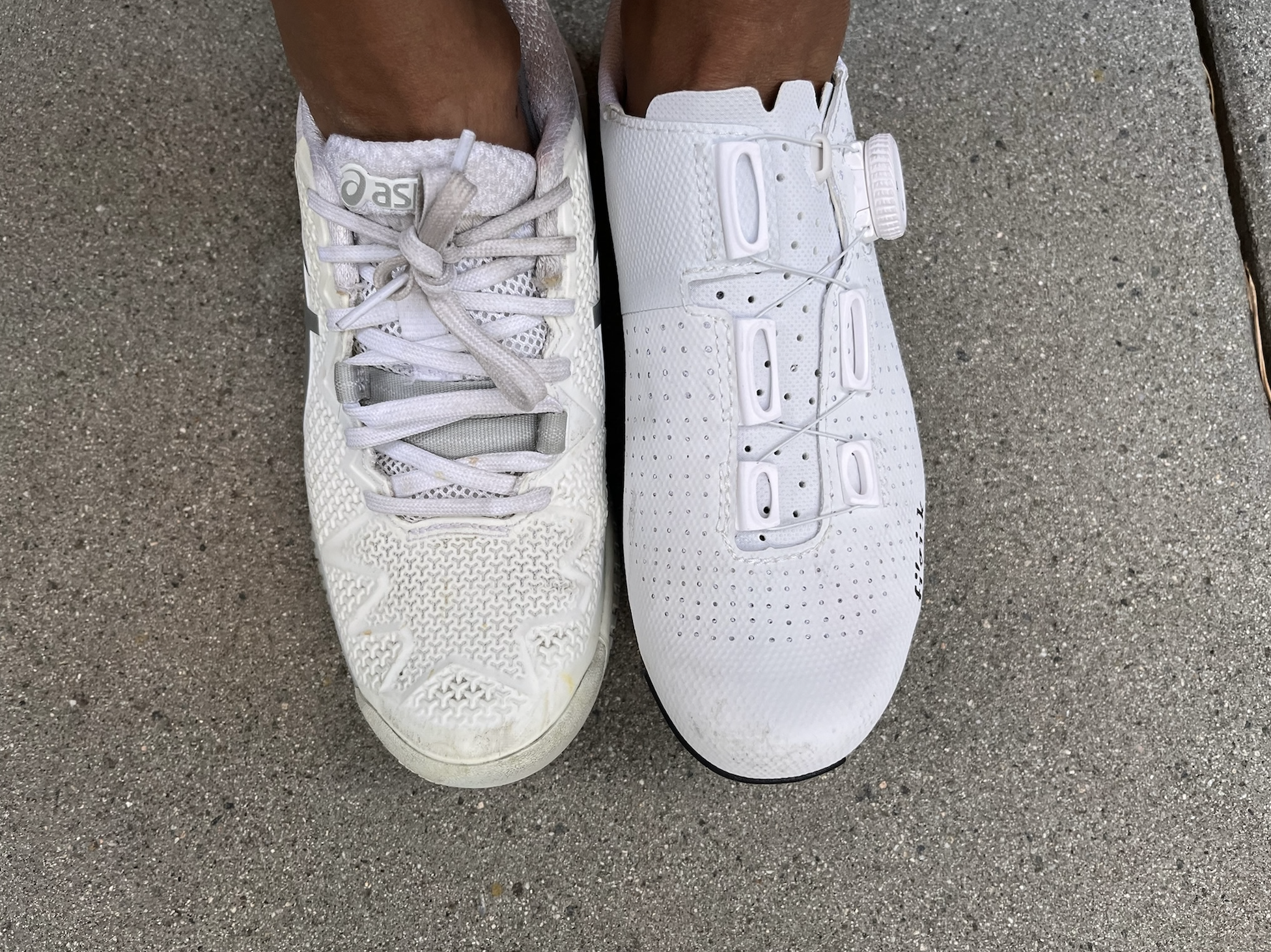
The key to a good cycling shoe, I’d learned, is that it fits snugly but doesn’t pinch anywhere. After trying on a few pairs and searching for just the right size, I finally landed on a sleek pair of white Italian shoes that felt just right—as if they were made for me.
Comfortable, supportive, and stylish. I was ready to roll.
Here’s the thing about road biking shoes: they’re designed to clip directly into the pedals, locking your feet in place. It’s like snowboarding—you’re securely attached, and it also means your reflexes need to adjust.
Before you stop, you have to twist your foot to unclip. Otherwise, well… your feet stay firmly attached to the bike, and gravity quickly takes over.
I headed to the bike shop to get the matching pedals installed. Once everything was set up, I climbed onto the bike inside the store to test them out. And then it happened.
I fell. Hard.
In less than 30 seconds, I hit the hardwood floor.
I got back up, clipped in again, and started pedaling. This time, I lasted about 20 seconds before I was on the floor again.
Over the next ten minutes, even with help, I couldn’t unclip fast enough before losing balance.
My legs were a patchwork of fresh bruises.
What if I couldn’t get the hang of this? What if I fell during a ride and seriously hurt myself? My brain was already compiling a list of reasons to abandon the shoes altogether.
Here’s the kicker: I’d signed up for a group ride that was starting in just ten minutes.
Standing there, I had a choice to make.
What would you have done in my shoes?
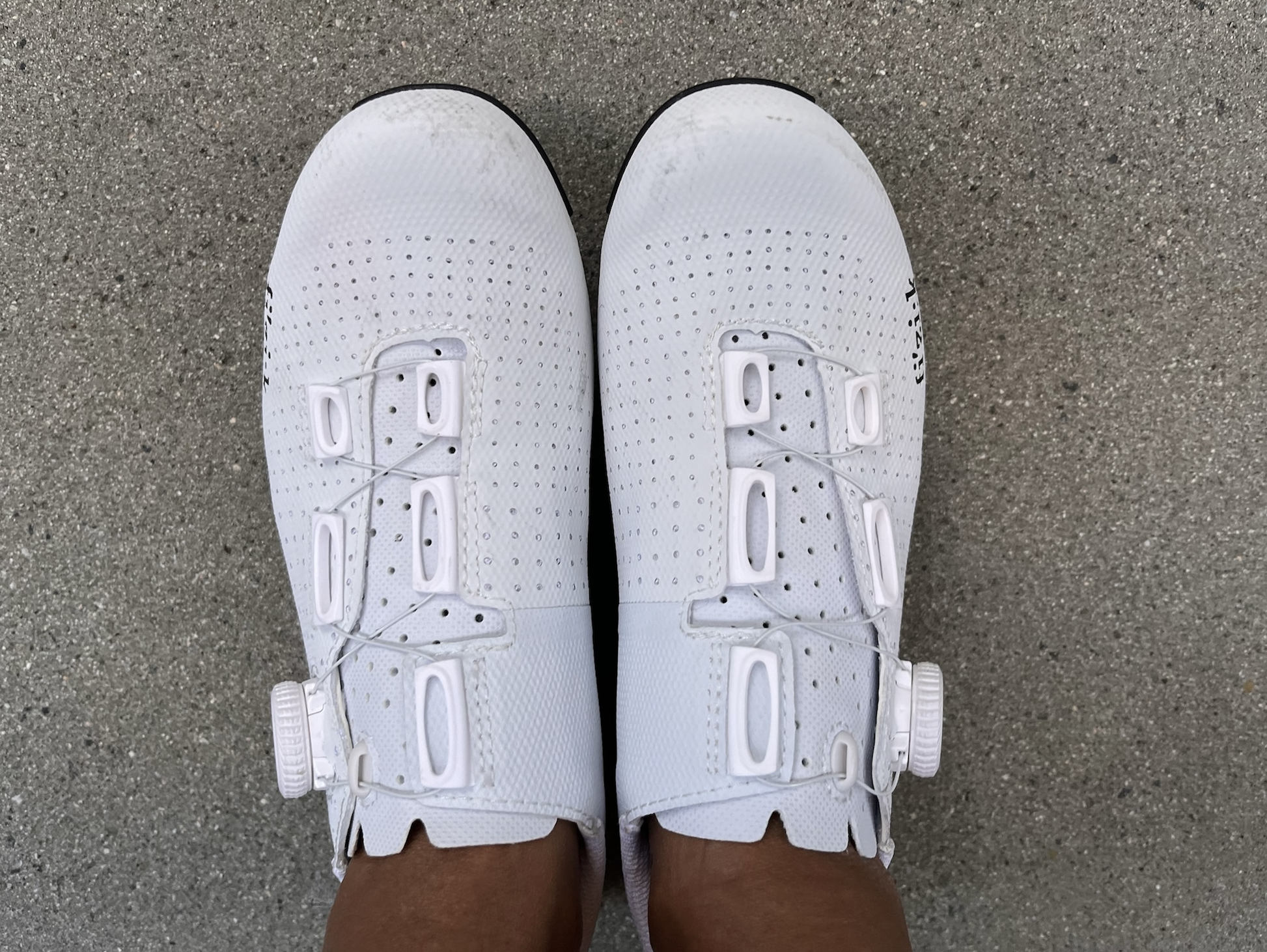
Table of Contents
The science behind psychological flexibility
Psychological flexibility refers to the ability to adapt your actions and responses based on the situation at hand. In essence, it’s about being open to adjusting your behavior in a way that aligns with your values, even when faced with new or uncomfortable external situations or internal uncomfortable feelings, thoughts, sensations, urges, memories, or emotions.
In positive psychology, research shows that psychological flexibility is strongly linked to well-being, resilience, and life satisfaction. A study by Tami Kim and colleagues (2020) found that people who were more flexible in their behavior were better able to handle stressful situations; participants also reported higher levels of happiness and greater ability to maintain relationships during difficult times.
You need to be curious to be psychologically flexible
Kashdan and colleagues, through the development of the Curiosity and Exploration Inventory-II (2009), identified two critical dimensions of curiosity: stretching – the active pursuit of novel and challenging experiences – and embracing – the capacity to tolerate and even thrive amidst uncertainty and ambiguity.
Think about this: when you try something unfamiliar, you’re stretching. It might feel awkward or even nerve-wracking at first, but each step helps you grow. At the same time, embracing asks you to lean into the “what-if thoughts” of that experience without retreating.
When you stretch yourself outside of your comfort zone and make room for the uncomfortable feelings that come along with an open attitude, you strengthen the muscle of psychological flexibility that is central to value-driven living.
Everyday situations for you to practice psychological flexibility
Imagine you’re in a meeting, and your colleague brings up an idea you hadn’t considered before. Initially, you might feel worried or uncertain about it, especially if it challenges your assumptions or routines. But instead of rejecting the idea outright, you take a moment to listen carefully and reflect on what you heard.
Think about a situation where your boss asks you to take on a new project or shift the way you’re approaching an existing one. You might feel overwhelmed, and you could try approaching the situation with curiosity. Instead of quickly saying, “I’m too busy” or “That’s not how we’ve always done it,” you could think about how this new project aligns with your professional strengths or career values.
Suppose you’re at a family gathering, and an uncomfortable conversation arises – perhaps about a political issue or a sensitive topic. You might want to pause and ask questions, seeking to understand the other person’s point of view even if you disagree with it.

Why behavioral flexibility matters for your mental health and well-being
Psychological flexibility isn’t just about changing what you do—it’s about making conscious choices that reflect your personal values.
When you practice behavioral flexibility, you are better equipped to manage stress and anxiety because they approach situations with a more open mindset, ready to pivot and adjust when needed. This makes them less likely to fall into the trap of rigid, unhelpful thinking patterns that can contribute to depression or chronic worry.
The bottom line about psychological flexibility
Psychological flexibility isn’t just a skill—it’s a mindset that helps you navigate the complexities of life and enables you to thrive, even in uncertain or stressful situations.
What happened?
Cycling has always been my happy place. It gets me outside, clears my mind, and keeps my body moving. I love the challenge of a steep hill or a long-distance ride.
I’m not training for the Tour de France; I cycle because it feels grounding.
So, I ended up riding with two different shoes.