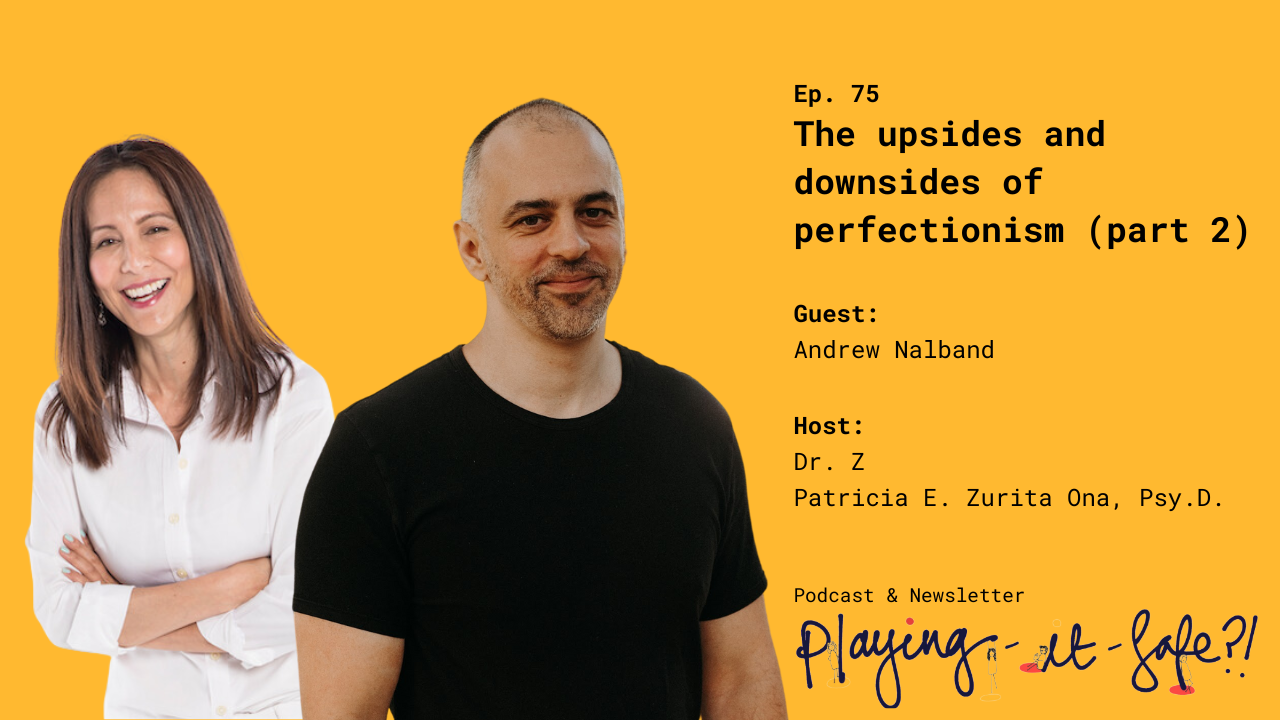
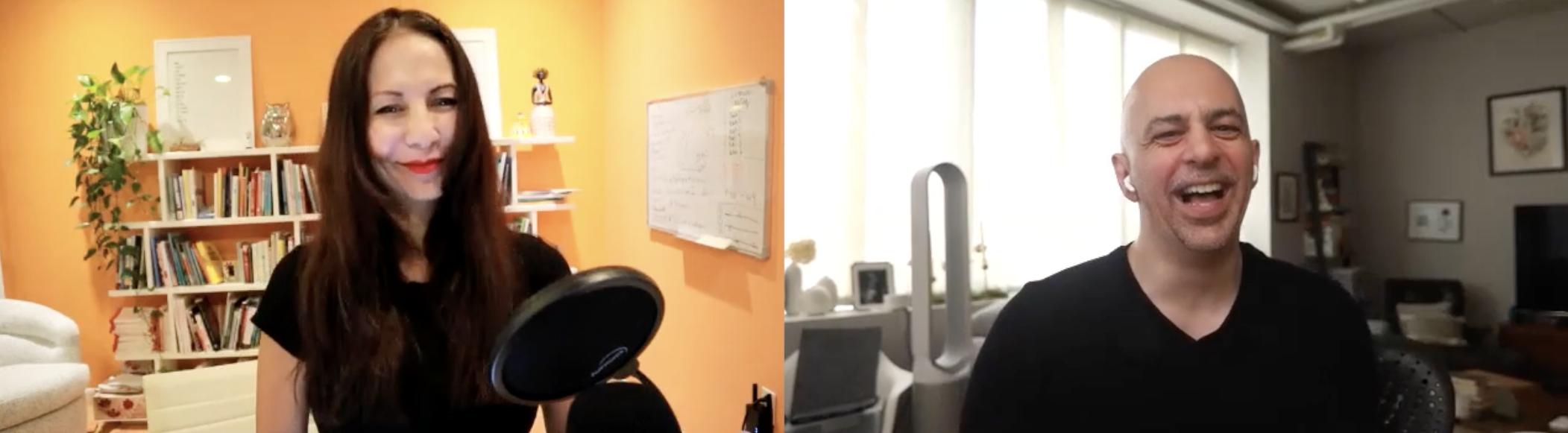
In this second part of my conversation with Andrew Nalband, we discussed in detail skills to manage all the noise that shows up in our heads, what has worked, and what hasn’t worked for him when dealing with a tendency to do things right and perfectly.

Perfectionistic and high-achieving behaviors are very common in different areas of our life, and yet, they can also be a hidden problem for many.

Perfectionistic actions don’t develop from one day to another but over a long period of time. So, likewise, it takes time and practice to change them, learn to behave differently, and take action.

Key Takeaways

  • Why meditation/mindfulness practices matter
  • The influence of cell phones on our thinking
  • The difference between cognitive restructuring and acceptance
  • A key question to ask yourself when your mind comes up with a lot of thoughts
  • The impact of “positive thinking” in our wellbeing
  • How to practice mindfulness on-the-go

About Andrew Nalband

He is a veteran of three classes of Techstars and the former Director of User Experience at Ubersense Inc. (acquired by Hudl in August 2014). Nalband has helped more than 25 companies improve their products, and has driven iPhone apps to the top of the App Store and millions of installs.
perfectionism

Resources

Resources from Dr. Z’s desk

Show notes with time-stamps

01:11 Andrew Nalband: A Tech Veteran’s Journey
02:13 Exploring Mindfulness and Overcoming Perfectionism
06:53 Mindfulness in Daily Life: Practical Tips and Insights
12:58 The Impact of Technology on Mindfulness and Presence
30:28 A Hypothetical Coffee Chat with Steve Jobs
 

Listen Here

Apple
Spotify

ACT online courses 

Learn more

Learn more

Learn more

Learn more

Learn more

Learn more

About Dr. Z.

I’m originally from Bolivia, South America, and am a psychologist by training. I’m formally trained in empirically supported treatments, and when I say “formally,” I mean that since 2004 I have received intensive training in them, particularly in Acceptance and Commitment Therapy (ACT) and Cognitive Behavior Therapy (CBT). 

Over the past 18 years, I have created resources for and worked with overthinkers and overachievers dealing with all types of anxiety-related struggles: perfectionism, procrastination, productivity anxiety, uncertainty intolerance, indecision, impostor phenomenon, overthinking, phobias, rumination, panic, worry and obsessive-compulsive disorder. I absolutely love my job!

In 2019, I was nominated as a fellow by the Association for Contextual Behavioral Science because of my contributions related to the applications of ACT for anxiety-based struggles. I’m the author of seven books and the co-author of three (see the section on previously written books).

I’m the founder and director of the East Bay Behavior Therapy Center, a boutique private center in the San Francisco Bay Area that offers therapy and coaching for anyone experiencing anxiety-based struggles.

In 2023, I gave a TEDx talk, “Stop playing-it-safe and start living” that has more than 264K downloads.

While I’m a psychologist by training and science-based by passion, my style is jargon-free, accessible, caring, and lighthearted; teaching ACT skills doesn’t have to be boring or inaccessible, so I do my best to make every skill I teach—in any format—as engaging as possible. 

I believe that learning to navigate anxiety-based reactions is one of the key skills of the 21st century, and I’m passionate about it.

I'm passionate about disseminating ACT skills for anxiety-based struggles.

HOW DO YOU PLAY-IT-SAFE?


Complete this 7-minutes quiz
and get your Playing-it-safe Profile!!

You have Successfully Subscribed!

Share This