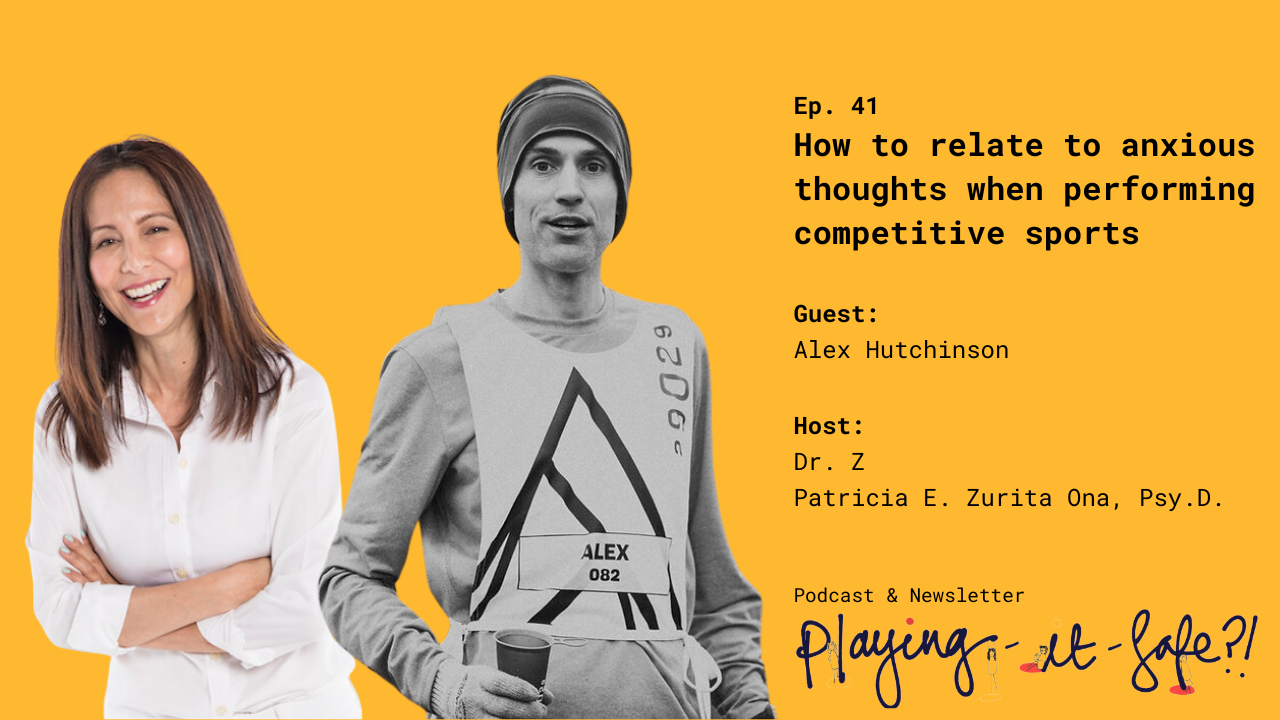
How to relate to anxious thoughts when performing competitive sports

Taking my thoughts too seriously

How do the top athletes think about their physical struggles – pain, exhaustion, thirst – when competing?

How do the top athletes push their bodies to the absolute limit over hours or days of competition?


When feeling under significant pressure or in high stakes situations, it’s natural that our mind jumps to conclusions about what’s going on or what’s going to happen.

It’s natural that our mind comes up with thinking traps. It’s natural that our mind compares our performance with others’ performance. It’s natural that our mind pushes us to stop trying, to give up, and to stop competing.

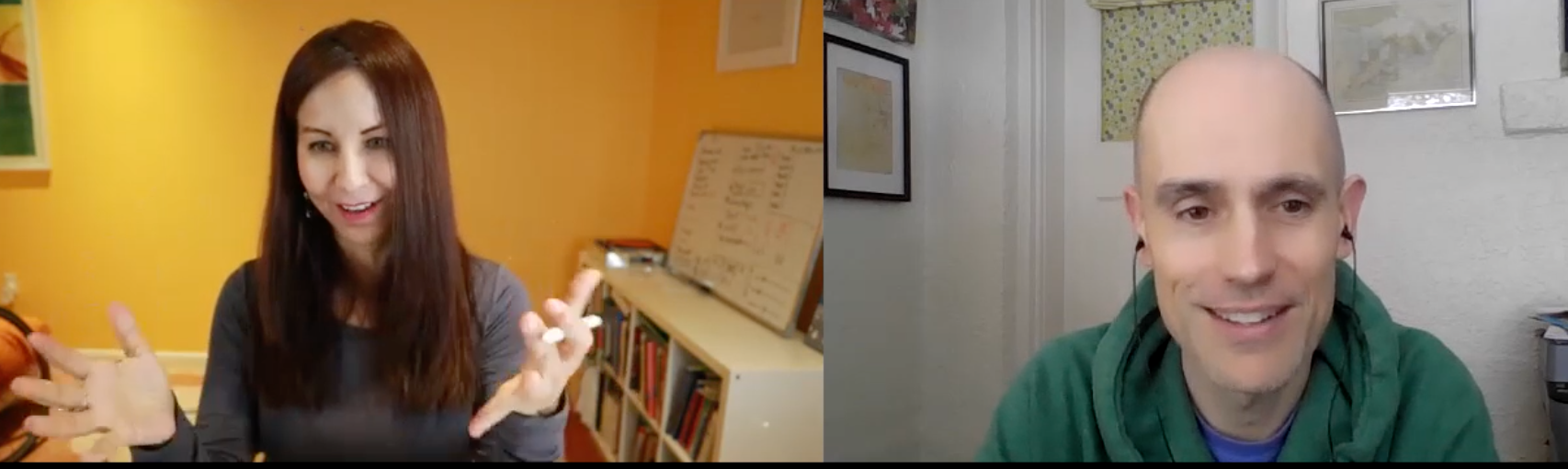
I had the honor of interviewing Alex Hutchinson, a journalist, former Canadian national team distance runner, current award-winning science journalist, and author of the book Endure.

Key Takeaways

In this conversation Alex kindly shares:

  • His writing process
  • How he decided to write Endure
  • How he maintains a scientific approach to his writing
  • How he handles the uncertainty of not knowing
  • How to think about physical sensations during a high athletic performance
  • How to relate to physical discomfort when competing at a professional level

This conversation has reminded me, once again, about the importance of scientific humbleness.
anxious thoughts

Resources:

Show notes with time-stamps

01:33 Newsletter: A Deep Dive into Acceptance and Commitment Skills
03:01 Today’s Special Guest: Alex Hutchinson, PhD
04:18 Exploring the Mind-Body Connection in Athletic Performance
06:08 Behind the Scenes of Alex Hutchinson’s Writing Process
14:35 The Scientific Approach to Contradictory Research
24:34 Navigating Criticism and the Challenges of Scientific Journalism
28:16 The Journey of Writing ‘Endure’: From Idea to Publication
33:14 The Writing Process: Balancing Journalism and Book Writing
39:17 Unlocking the Writer’s Block: A Personal Strategy
39:58 The Outline Dilemma: Sticking to the Plan vs. Flexibility
41:04 The Two Schools of Writers: Perfecting the First Sentence
42:16 Exploring Athletic Performance: Mindset, Muscle, and Limits
43:03 The Power of Acceptance in Enhancing Performance
43:29 Self-Talk, Brain Training, and Performance: An In-depth Look
49:55 Navigating Negative Thoughts and the Role of Acceptance
01:00:08 Visualizing Success: The Right Way to Prepare
01:07:41 Personal Reflections on Belief and Performance Limits
01:11:57 A Dream Conversation: Tea with a Marathon Legend
 

Listen Here

Apple
Spotify

ACT online courses 

Learn more

Learn more

Learn more

Learn more

Learn more

Learn more

About Dr. Z.

I’m originally from Bolivia, South America, and am a psychologist by training. I’m formally trained in empirically supported treatments, and when I say “formally,” I mean that since 2004 I have received intensive training in them, particularly in Acceptance and Commitment Therapy (ACT) and Cognitive Behavior Therapy (CBT). 

Over the past 18 years, I have created resources for and worked with overthinkers and overachievers dealing with all types of anxiety-related struggles: perfectionism, procrastination, productivity anxiety, uncertainty intolerance, indecision, impostor phenomenon, overthinking, phobias, rumination, panic, worry and obsessive-compulsive disorder. I absolutely love my job!

In 2019, I was nominated as a fellow by the Association for Contextual Behavioral Science because of my contributions related to the applications of ACT for anxiety-based struggles. I’m the author of seven books and the co-author of three (see the section on previously written books).

I’m the founder and director of the East Bay Behavior Therapy Center, a boutique private center in the San Francisco Bay Area that offers therapy and coaching for anyone experiencing anxiety-based struggles.

In 2023, I gave a TEDx talk, “Stop playing-it-safe and start living” that has more than 264K downloads.

While I’m a psychologist by training and science-based by passion, my style is jargon-free, accessible, caring, and lighthearted; teaching ACT skills doesn’t have to be boring or inaccessible, so I do my best to make every skill I teach—in any format—as engaging as possible. 

I believe that learning to navigate anxiety-based reactions is one of the key skills of the 21st century, and I’m passionate about it.

I'm passionate about disseminating ACT skills for anxiety-based struggles.

HOW DO YOU PLAY-IT-SAFE?


Complete this 7-minutes quiz
and get your Playing-it-safe Profile!!

You have Successfully Subscribed!

Share This