Acceptance and Commitment Therapy (ACT) is a form of Cognitive Behavior Therapy (CBT).
Cognitive Behavior Therapy traditionally has been focused on delivering specific treatment protocols for specific struggles; for instance, if you were dealing with fears of public speaking as we see in social anxiety, then there was a treatment protocol for you to get better or sometimes five different treatment protocols that you could choose from, based on the clinician you worked with If you were dealing with panic attacks, there was a specific treatment protocol for it.
However, since 2000 Cognitive Behavior Therapy has moved from having a single protocol for a specific disorder – social anxiety, panic, etc- to have a unified protocol for multiple struggles because, in the case of anxiety, for example, it’s much more common to struggle with different types of fears than a single one.
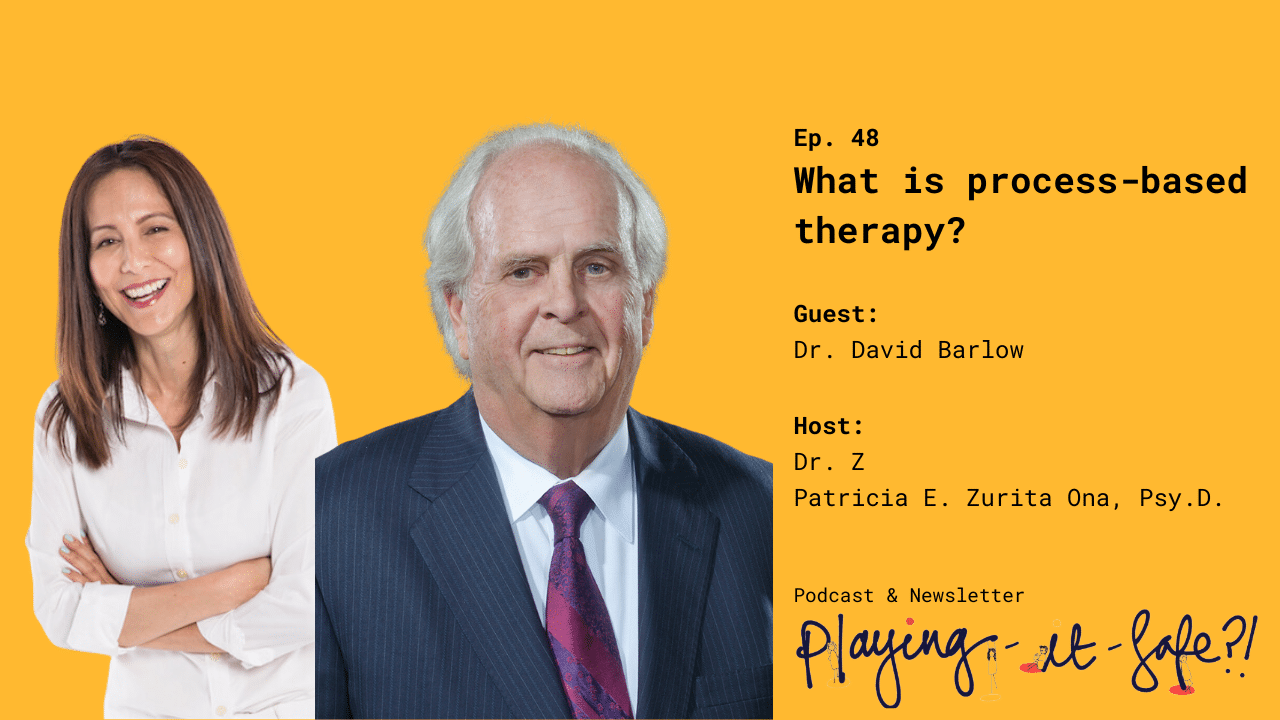
So if you’re dealing with attacks it’s also possible that you’re dealing with chronic worry, or if you’re dealing with chronic worry it’s also possible that you’re struggling with fears of public speaking. Today I have a chance to speak with Dr. David Barlow, the developer of the Unified Protocol.
Key Takeaways
In this conversation, you will hear
- The basics of a Unified protocol in cognitive Behavior Therapy
- What is avoidance and how it works
- What’s negative affect and how it works
- What’s neuroticism and how it works
- Why is important to understand emotions
- What are temperamental personality factors
You will also hear me asking Dr. Barlow for permission to be sassy and ask controversial questions.
- What’s a process in behavior therapy?
- Is process-based therapy different from the unified protocol?
- What is a transdiagnostic process: is an intervention different than a process? Is a transdiagnostic process a way in which people cope with internal experiences?
Tune in, you don’t want to miss how cognitive behaviorists are thinking of therapy these days and how this informs your experience in therapy or coaching when dealing with fear-based struggles.
About Dr. David Barlow
Dr. Barlow received his Ph.D. from the University of Vermont and has published over 650 articles and chapters and over 90 books and clinical manuals, mostly in the areas of anxiety and related emotional disorders and clinical research methodology. He is formerly a Professor of Psychiatry at the University of Mississippi Medical Center and a Professor of Psychiatry and Psychology at Brown University.
Dr. Barlow was also a Distinguished Professor in the Department of Psychology at the University at Albany, State University of New York, and Director of the Phobia and Anxiety Disorders Clinic at the University at Albany, SUNY.

Show notes with time-stamps
Listen Here